
The rhetorical triangle is a tool that can help us understand any rhetorical situation. We’ll keep this tool in mind as we define kairos as a component of a rhetorical situation.
Take a look at the images representing Kairos as a mythical creature on page 39-40 in your textbook ARCS. Here’s one from a bas-relief in Turin:
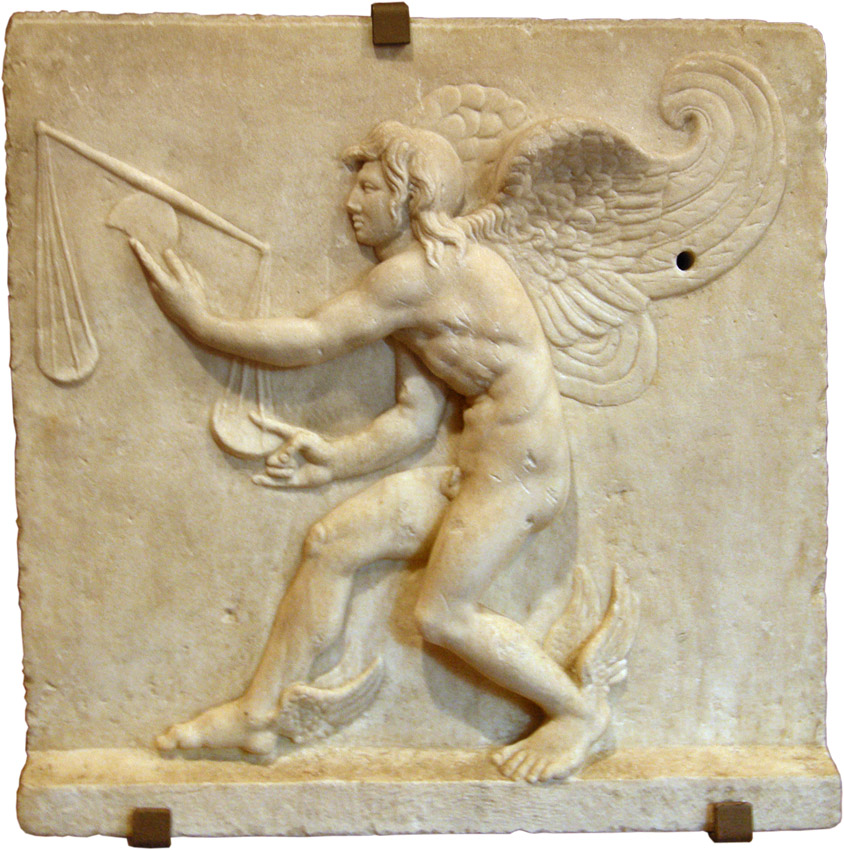
Together, we read the above image, and the other image in our textbook, to come up with the following qualities that define kairos:
- exigence
- urgency
- balance (particularly in terms of time and space)
- manipulation (particularly in terms of negotiating positions and points of view)
- time/speed/pace
- opportunity
- foresight
- direction/movement/momentum
- hesitation & care
Kairos at Work within a Discourse
Considering our collective definition of kairos, we took a look at The Economist article “America’s Tragedy: After the Virginia Tech massacre” (ARCS 41-42) to understand how kairos is at work as a rhetorical device in this argument.
Kairos as Invention
Kairos can also be used as a tool for invention, as a way to help a rhetor find something worth writing/speaking/composing about. Turn to page 44 in ARCS and take about 5 minutes to consider the “Questions Raised by Kairos” to help you identify an issue worthy of your consideration. Write your stance on an issue you choose and use the questions to explore the issue further.
Homework
WRITE Blog Post 2 (due before next class 9/16): Develop your in-class writing today that asked you to use kairos as a tool for invention. Write 500 words (minimum) about the issue and its kairotic imperative (or its urgency). Define the issue, summarize its relevance, and identify the lines of argument–or the differing positions–that surround the issue. (In some cases, this might mean you need to demonstrate that an issue actually is urgent to consider.) You should cite at least one source in this post. We will begin next class by looking at your posts in groups!
READ ARCS Chapter 1 (1-36).

 Rhetoric 005 | History of Rhetoric | Fall 2019