CLASS WILL NOT MEET ON MON 12/9.
In lieu of class, I’m holding extended office hours for the week of December 9-13th:
- Mon, 12/9 @ 10-11a & 1-5p
- Wed, 12/11 @ 9:30a-2:30p
- Thurs, 12/12 @ 11:30a-2:30p
- Fri, 12/13 @5-6p
CLASS WILL NOT MEET ON MON 12/9.
In lieu of class, I’m holding extended office hours for the week of December 9-13th:
You can earn up to 30 points extra credit by doing the following:
*If you’ve already completed your Persuasion Project before this event (say, because you presented your final in class), you can bring any piece of writing from another class to Cookies, Coffee, and Cramming and write about the session, BUT you’ll also have to connect the session to a rhetorical concept you learned in our class this semester!
We’ll begin by looking at Myles’ draft together. If anyone else wants to share with the class, we’ll take a look at other projects from our classmates, too.
You’ll then move into pairs to peer review each other’s drafts.
Complete your Persuasion Projects! The final project is due to your WordPress site or via email to me by December 16!
The following students will be offering their projects as in-class presentations:
You will bring a draft of your Persuasion Project to class on Monday, November 25.
Resources for making your final projects:
After we share the above resources, we’ll watch two TEDTalks and use our rubric to discuss how well these talks serve as models for what’s possible for us.
You will bring a draft of your Persuasion Project to class on Monday, November 25.
If you’re interested in presenting your project in class, plan to be ready to present on either December 2nd or 4th. We will schedule presentations on Mon, 11/25.

We’re taking our marks, with the semester’s finish line in the offing. To ensure that you’re prepared to hand in your final Persuasion Project by Monday, Dec 16 (note the change in due date), all in-class activities between now and the end of the semester will involve working on your projects.
Today, you’ll share your storyboards (or an alternative map) and the artifact that you brought in small groups. You will evaluate each other’s materials for:
After receiving feedback, you’ll take a couple minutes to quietly plan out your next steps alongside the final rubric for this assignment.
You will bring a draft of your Persuasion Project to class on Monday, November 25.
Let’s talk together about how we can help you get to that draft.
We are meeting for face-to-face conferences this week, instead of meeting as a class.
Arrive ON TIME to Mason 122 for your scheduled conference with me, so we can discuss your progress on the Persuasion Project.
You can confirm your conference time here.
In today’s class, we looked at Andrew Spieldenner’s article “Statement of Ownership: An Autoethnography of Living with HIV.” I handed out hard copies of the article, which is also available through the Hofstra University Library database.
Drawing on Ellis & Bochner, Spieldenner indicates that “autoethonography combines the researcher’s self within a particular cultural context” (14). I’ve chosen to bring in Spieldenner’s text for a few reasons. I consider Spieldenner’s text an important read for the way it brings attention to the stigma of an HIV/AIDS diagnosis, but I also believe that Spieldenner’s use of autoethnography as a research method offers a model of what is possible in your own work for the Persuasion Project.
We noted in class that Spieldenner’s research-heavy early sections establish his ethos as a knowledgable rhetor and his reflective sections employ pathos to appeal to his audience. I encourage you to consider using ethnography as a way of gathering research and organizing information for your Persuasion Project.
Come ON TIME to your one-to-one conference with me next week in Mason 122. We’ll discuss your progress on the Persuasion Project based on your recent Blog Post #8.
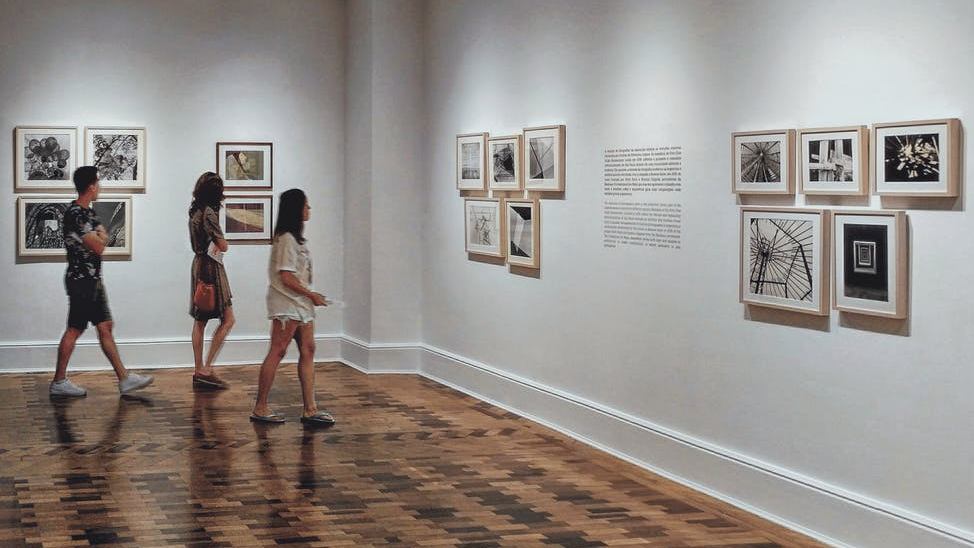
Today, you’ll move around our room, reading our “gallery” and offering feedback to your fellow rhetors. Your feedback should move the rhetor forward in their Persuasion Project, so while a comment like “interesting” is nice, it’s not super helpful in terms of understanding possible next steps. Here are examples of ways to construct productive feedback:
We’ll spend a couple minutes debriefing and reflecting on what happened during the gallery walk.
We’ll use this document to sign-up for one-to-one progress conferences with me for Nov. 11-13.
Review Chapter 8 on Extrinsic Proofs and start drafting ways you will gather extrinsic proofs through testimonials, interview data, or survey data.



At the heart of all the rhetorical tools we’ve learned this semester is an understanding of how rhetors communicate with audiences. When rhetors use commonplaces, extrinsic proofs, pathos, ethos, and logos, they produce some kind of effect on their audiences. So today, we’re going to spend class thinking about–really thinking about–a specific audience you will address in the Persuasion Project and what medium or genre will be most effective to convey your purpose.
NOTE that your in-class work today will be due as a blog post on Saturday, November 2.
Continue working on your Midterm, which due is as a NEW PAGE to your blog no later than midnight on Wednesday, October 30th.
Extrinsic proof, in short, is empirical evidence gathered by doing primary research (Crowley and Hawhee 200). So quantitative data (like statistics generated from surveys), artifacts, and first-hand accounts of events (like spoken, video, and audio testimonies) are all considered extrinsic proofs. The most important thing to keep in my when using extrinsic proofs is to be aware of the trustworthiness of your sources and to evaluate extrinsic evidence carefully.
Crowley and Hawhee offer the following process for evaluating extrinsic sources (208):
Let’s take a look together at the following examples of testimony, or first-hand accounts of an experience that is considered an extrinsic source.
What is happening in each video? How are these examples of The Guardian evaluating their extrinsic proofs?
Work on your Midterm and think about what you want to work on for The Persuasion Project.
I will not be assigning much writing homework between now and our midterm; instead, I will be giving points for class attendance and participation for in-class writing and activities. Our in-class work next week will be intended to help you make strides on The Persuasion Project. So, if you miss class between now and October 30th, you risk missing in-class writing points!
 Rhetoric 005 | History of Rhetoric | Fall 2019