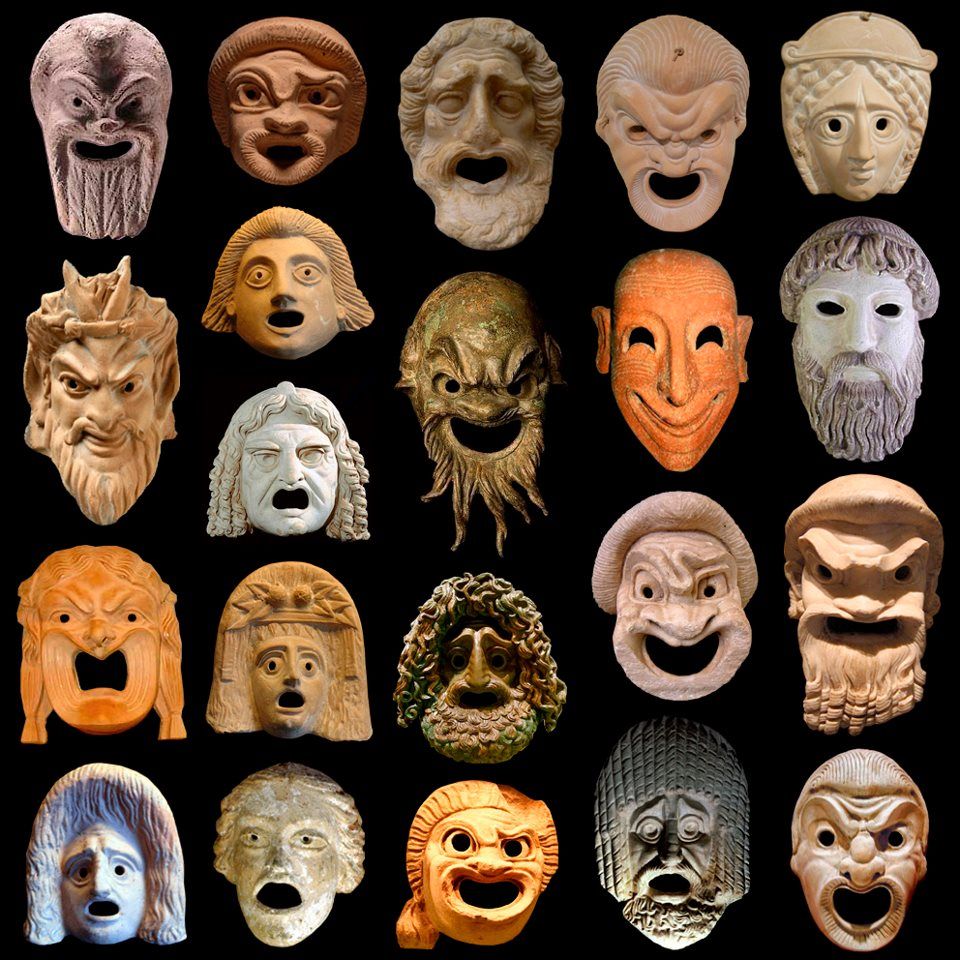
Ethos
Ancient Greeks understood ethos as referring to the way a rhetor exhibited character (either for themselves or in representing someone else), both by individual acts and by community assessment. Crowley and Hawhee state that “ethos was not given by nature but was developed by habit” and was also dependent on a “community’s perception of [a rhetor’s or character’s] actions” (149). In other words, ethos could succeed when a rhetor demonstrates that they, or their character, are virtuous, well-informed, and understand their audience. Likewise, ethos can fail–or a rhetor can be of bad character–when their honesty is questionable, they offer faulty evidence, or they are seen to lack goodwill towards their audience.
Inventing Ethos through Ethopoeia
One way rhetors construct ethos is through ethopoeia, or literally “making” ethos through lists and definitions of behavior to establish character. Let’s listen together to about 4 minutes (3.53-7.50) of an episode of Hidden Brain, “Online Behavior, Real-Life Consequences” to understand how the host Shankar Vedantam invents ethos for William.
Although not a detailed description of another person in the way Vendantam describes William, Andrew Sullivan’s description of then-candidate Barack Obama functions as a kind of ethopoeia (153). Let’s take a look at this example and discuss how Sullivan succeeds in inventing ethos.
If we have time, we’ll look back at Demi Lovato’s different representations of her own character to see how she uses ethopoeia in different versions of “Sorry, Not Sorry.”
Homework
One way that the Ancient Greeks practiced ethopoeia was through inventing dialogue, mannerisms, and descriptions, as if composing a play, between different characters. Write a brief play where you represent the voices, language, and characteristics of two different public figures. Maybe you want Trump to talk to Obama, or Kim to chat with Kanye, or Party-Demi to talk to Awards-Show-Demi. Pick any two public figures (alive or deceased) and practice ethopoeia by writing a play where they’re in dialogue. Your play can be related to the issue you’ve been working on or not!
A successful ethopoeia will take time and offer enough details for me, as your audience, to understand your characters in some way.
Post your play as Blog Post 7 by next Wed, Oct. 16.
READ Chapter 7 “Pathetic Proofs: Passionate Appeals” (170-199) by next class.

 Rhetoric 005 | History of Rhetoric | Fall 2019